
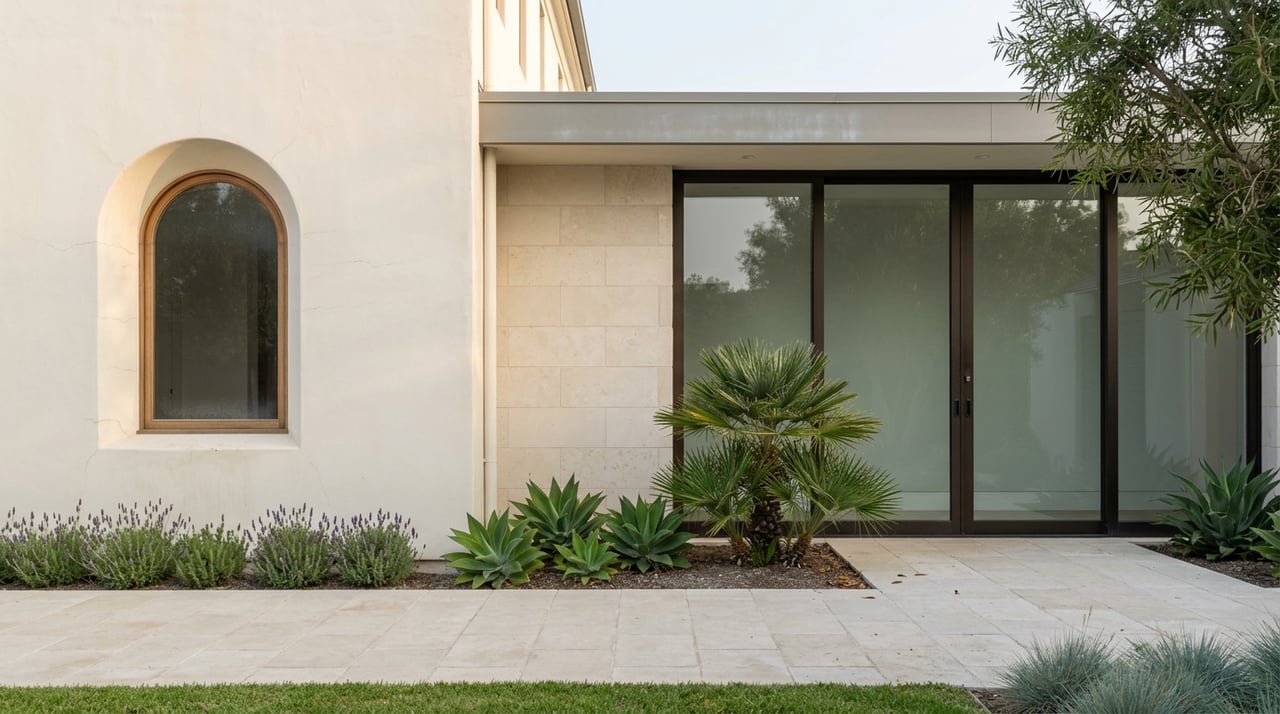
In The Know
September 17, 2026
In January of this year, the Dana Point Planning Commission opened a case file for a home on Monarch Bay Drive. The owners wanted to expand a structure that already sat closer to the street than current rules allow. In February, a different file landed on the same agenda for a home on Beach Road, this one a request to replace an existing emergency shoreline structure with a permanent gravity block wall and rip-rap scour blanket after the ocean had already threatened the foundation. In April, a third file appeared for a brand new single-family home on Santa Clara Ave, a straightforward new build with an attached garage.
Three Dana Point addresses. Three completely different permit paths, timelines, and levels of state involvement. None of it came down to square footage or budget. It came down to where each lot sits relative to a set of overlapping distance lines that most homeowners never think about until they try to pull a permit or list the house.
Dana Point's zoning code requires a Coastal Development Permit for most development inside the Coastal Overlay District, and the city lists specific exemptions for smaller projects. But several triggers pull a project back into full CDP review even when it would otherwise qualify for an exemption: a structure or improvement encroaching within 50 feet of a coastal bluff edge, work located between the sea and the first public road paralleling it, work within 300 feet of the mean high tide line where there is no beach, and any significant grading or land alteration within 50 feet of a bluff edge on a single-family lot, a threshold that widens to 100 feet for other property types.
Stack those thresholds on a map of Dana Point and you get a patchwork. A lot 60 feet from the bluff edge may clear the 50-foot line, but that alone does not establish that the review is city-only. The lot next door, sitting 40 feet from that same edge, does not clear the 50-foot line. Beyond the bluff-edge trigger, there is a second, separate line: the "appealable area," which the Dana Point Municipal Code defines as including anything between the sea and the first public road, within 100 feet of a wetland or stream, or within 300 feet of the top of a coastal bluff. A project inside that appealable area can face additional review beyond the city's own process.
That is the mechanism behind the three case files above. The Monarch Bay Drive addition needed a CDP because its scope exceeded the city's exemption limits and the lot's front yard setback was already nonconforming. The Beach Road wall needed a CDP because the property sits in the Floodplain Overlay District and the Coastal Overlay District at once, and because shoreline protective devices carry their own separate findings requirement under the zoning code. The Santa Clara Ave new build needed a CDP simply because it sits in the Coastal Medium Density Residential land use district, a designation that applies regardless of how modest the design is.
| Address | Project | Why it needed a CDP |
|---|---|---|
| 93 Monarch Bay Drive | Addition to an existing home | Addition exceeded exemption limits; front yard setback already nonconforming |
| 35127 Beach Road | Permanent shoreline protection | Located in Floodplain Overlay and Coastal Overlay Districts; shoreline protective devices require separate findings |
| 24632 Santa Clara Ave | New single-family home | Coastal Medium Density Residential land use district applies regardless of design |
Dana Point's remodeling standards follow the California Building Code's threshold for substantial improvement: when the cumulative value of alterations and repairs within a defined period exceeds 50 percent of the building's value, the entire structure has to meet current code, not just the remodeled portion. A homeowner planning a kitchen and a primary suite addition can cross that line without intending to, especially on one of Lantern Village's older bungalows, where the existing structure's value is lower relative to the cost of new work.
That threshold matters for timing as much as for cost. A project that trips the 50 percent rule on a lot that also sits inside the appealable area is now dealing with full code compliance and Coastal Commission appeal exposure at the same time. Reasonable people can plan around either one alone. Both at once is where remodel budgets and closing dates get revised.
None of this stays contained to the permitting phase. Disclosure is part of the sale process. Buyers in this price range tend to be sophisticated, and their inspectors know to ask for permit history before removing contingencies.
A homeowner who added a deck, replaced a window with a larger one to open a view corridor, or built out a patio without pulling a CDP faces a question at the point of sale: how to address the work.
This is also why a clean permit file has become a genuine selling point along Beach Road, Monarch Bay Drive, and the bluff streets above the harbor. Documented CDP history removes a question buyers are going to ask anyway.
If any of this sounds like a compliance detail unlikely to matter in practice, the city's own fight over the Headlands Bluff Top Trail says otherwise. The trail was established under the 2004 Headlands Development and Conservation Plan as a public access condition tied to development on the bluff, and it operated seven days a week, 7 a.m. to sunset, for nearly two decades. The Center for Natural Lands Management, which manages the adjacent Dana Point Preserve to protect the endangered Pacific pocket mouse, applied to the city in October 2024 for a CDP to formally set more restrictive trail hours.
The city's handling of that CDP application became its own dispute. In early 2026 the Coastal Commission approved an agreement allowing CNLM to cut public access to four days a week. Dana Point's city council voted unanimously on March 17, 2026 to file a writ of mandate, arguing the Commission had bypassed the CDP process and overstepped its authority. The Orange County Superior Court weighed in twice. On June 25, 2026 it ordered the more restrictive four-day schedule into effect on an interim basis. On July 20, 2026 it ruled the opposite way on the underlying dispute, finding that the city had violated the California Environmental Quality Act in how it processed CNLM's own CDP application. As of this writing, the trail is open Tuesday, Thursday, Saturday, and Sunday, 8 a.m. to 4 p.m. in winter and 8 a.m. to 6 p.m. in summer, and will stay on that schedule until CNLM's CDP for the hours is finally approved.
A public trail and a private remodel are different animals, but the underlying lesson is the same one a homeowner learns at the counter of the Planning Division: in Dana Point, the Coastal Development Permit process is not a formality layered on top of the real decision. It frequently is the decision, and it can take years to resolve when the city and the Coastal Commission read the same coastline differently.
Does every home in Dana Point need a CDP to remodel? No. Exemptions may apply, though it is worth confirming with the city rather than assuming.
How much time does a CDP actually add? Estimates vary by source and by project. Some local contractors report CDP review adding roughly three to six weeks to a standard project timeline, others cite four to ten weeks, and discretionary appeals to the Coastal Commission can add several months on top of that. Get a project-specific estimate from Planning before you commit to a listing date or a move-in deadline.
Can I find out if a previous owner's work was permitted? Yes. Permit records are searchable through the city, and your agent or escrow officer can help pull that history before you write or accept an offer.
If you're weighing a remodel, a sale, or a purchase on a Dana Point lot near the bluff or the beach, the permit question is worth answering before the design question. Myhanh Nguyen works these transactions across Dana Point's coastal neighborhoods and can help you get a clear read on where your property sits before you make a plan around it. Schedule your free consultation and home valuation to start with the facts specific to your address.
This article is general information, not legal, tax or financial advice. Consult a qualified professional about your situation.
October 22, 2026
October 15, 2026
October 8, 2026
October 1, 2026
September 24, 2026
September 17, 2026

September 10, 2026

September 3, 2026

August 27, 2026
A seasoned medical industry executive and sales leader, Myhanh Nguyen mastered the art of managing complex territories and client relationships. Today, she channels that same strategic skill and people-first focus into real estate — offering an elevated, results-driven experience for every buyer and seller.

Myhanh Nguyen | CA DRE# 2218383
23 Corporate Plaza Drive, Suite 100 Newport Beach, CA 92660